Laravel
Building Scalable Laravel APIs: A Beginner's Guide to Architecture, Performance, and Clean Code
Learn how to build scalable Laravel APIs with service layers, action classes, eager loading, caching, queues, and a clean React frontend contract. Practical...
Published 2026-07-25 by Aditya Mandal.
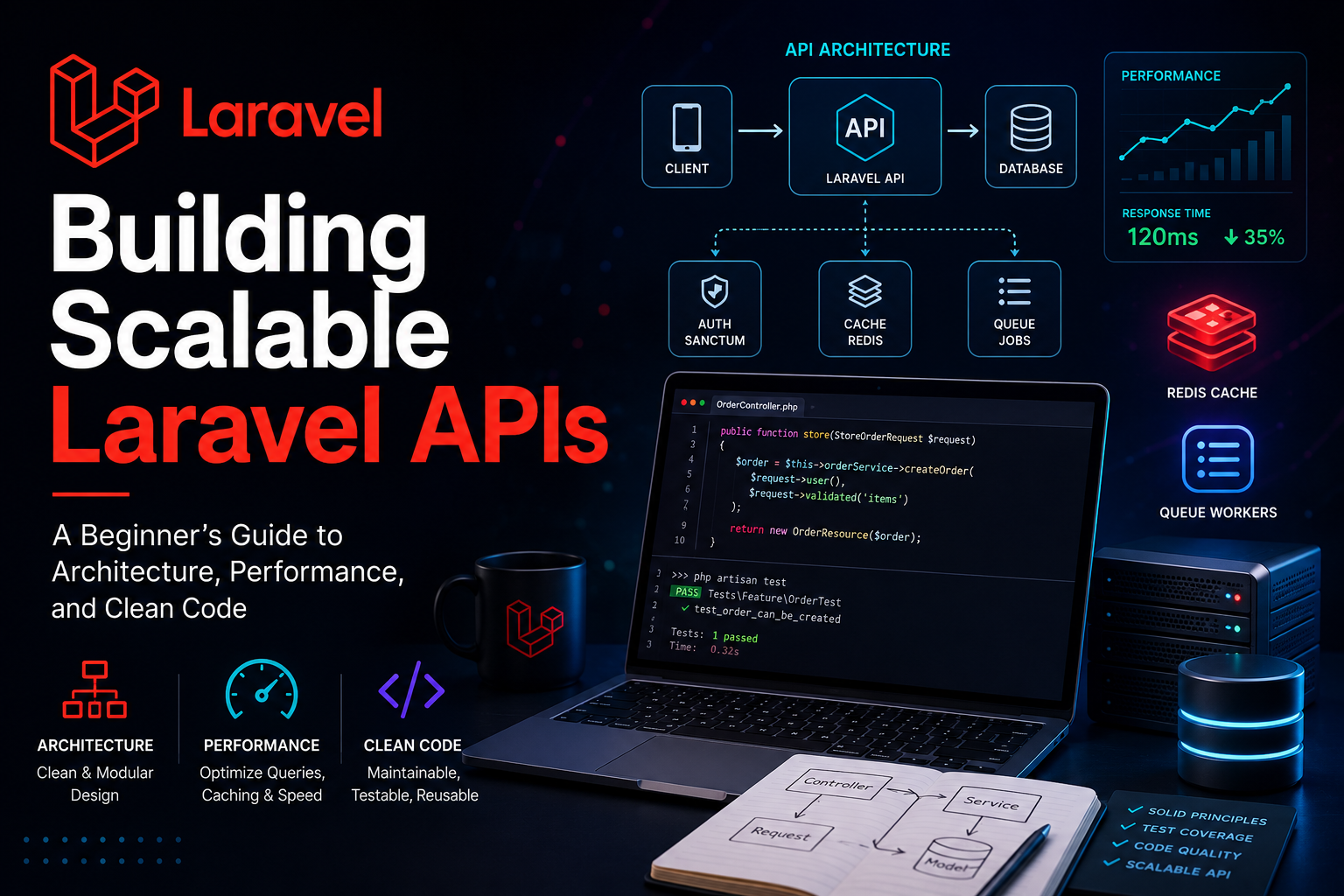
Building Scalable Laravel APIs: A Beginner's Guide to Architecture, Performance, and Clean Code If you have built a few Laravel applications and want to take the next step toward production-grade, scalable APIs, this guide is for you. We will walk through the architecture patterns, performance techniques, and clean-code habits that keep a Laravel API fast and maintainable as it grows — with practical code examples you can use today. Why Architecture Matters for Scalable APIs A scalable API is not just about handling more requests per second. It is about keeping the codebase understandable when features pile up, keeping response times low as data grows, and making sure a new developer can ship a change without breaking something unexpected. The good news: Laravel gives you most of the tools you need out of the box. The work is knowing which ones to reach for, and when. Project Structure: Controllers, Services, and Actions The Problem With Fat Controllers When you first learn Laravel, it is tempting to put all your business logic inside a controller method. For a small app, that is fine. But as the application grows, controllers become hundreds of lines long, the same logic gets duplicated across endpoints, and testing becomes painful because every test has to boot the entire HTTP stack. The Service Layer Pattern The fix is to move business logic into dedicated service classes. A controller's job is to receive a request, hand it off to a service, and return a response. The service holds the rules. Now the controller stays thin. The same OrderService can be called from a queued job, a console command, or a test — without duplicating a single line. Action Classes for Single Operations For one-off operations, an invokable action class is even cleaner. It does exactly one thi
https://adityamandal.dev/blog/building-scalable-laravel-apis/